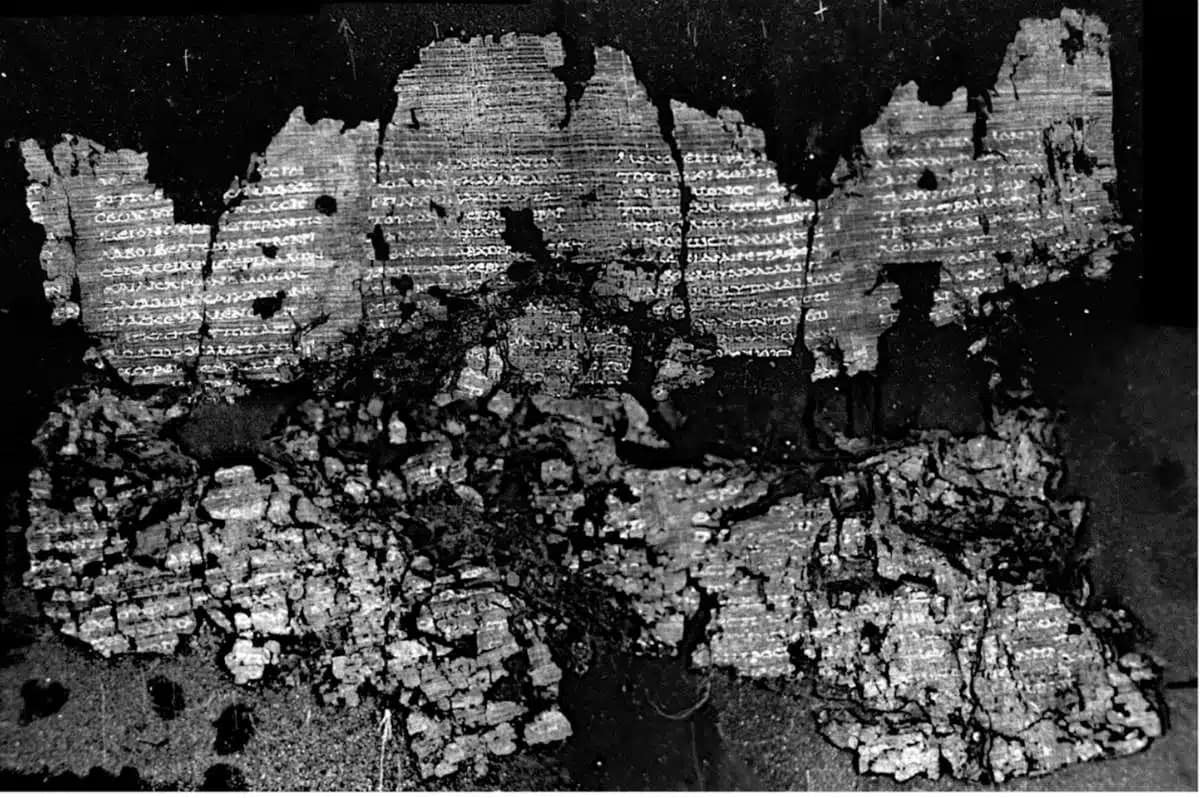
A newly deciphered Herculaneum scroll has revealed previously unknown details about the origins of Stoicism and its Greek founder, Zeno of Citium.
The discovery, made possible through a cutting-edge imaging method known as Pulsed Thermography, marks a major advance in efforts to read the carbonized scrolls buried by the eruption of Mount Vesuvius in A.D. 79. The findings were published in Nature by a research team led by Sofia Ceccarelli.
The Herculaneum scroll belongs to a collection of charred manuscripts discovered in the 18th century at the Villa of the Papyri in Herculaneum—believed to have been owned by Lucius Calpurnius Piso, Julius Caesar’s father-in-law. These papyri form the only surviving library from antiquity