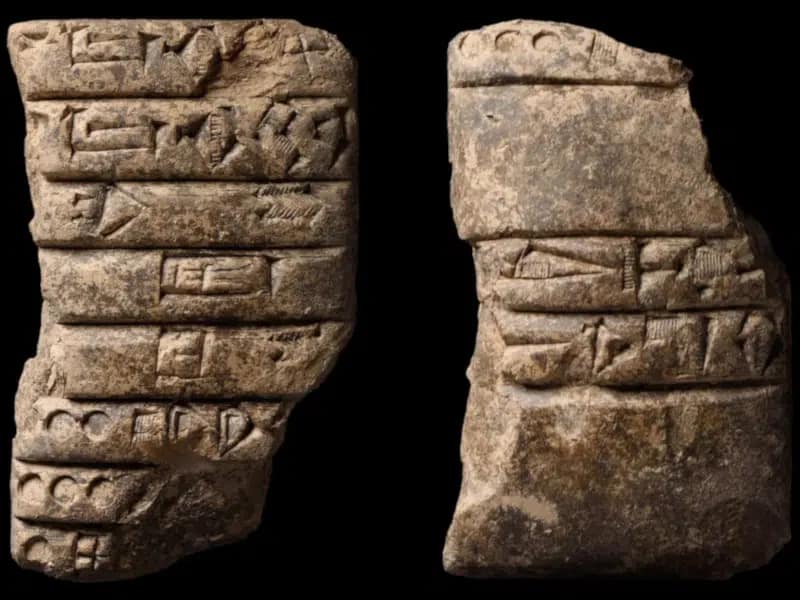
Archaeologists from the British Museum and Iraq have unearthed over 200 administrative tablets that shine a light on the early days of government systems. Dating back to 2300-2150 BCE, the clay cuneiform tablets were found in the ancient Sumerian site of Girsu, which is a city known today as Tello. Most interestingly, the tablets revealed the complicated bureaucracy of Akkadia, considered the first empire in history.
Girsu was settled around 4500 BCE as an ancient independent city located in modern-day Iraq. During its splendor, between 2600 BCE and 2200 BCE, it covered hundreds of hectares and was regarded as a sanctuary of the Sumerian heroic god Ningirsu. Around the year 2300 BCE, it was conquered alongside other Sumerian cities by Mesopotamian king Sargon, who established the Akkad dynasty—named after the city of Akkad, believed to be near modern-day Baghdad—that ruled over Girsu from 2300 to 2150 BCE.